
Lunafreya, The Journal
On the Shape of a Satchel
A small history of the bag that began as a purse and learned to carry books, and what its shape still knows.
The word is older than the bag. It comes down through French from the Late Latin saccellus, a little money bag, itself a small version of saccus, which only means a bag. English had taken it up by the fourteenth century, and for a long while a satchel was simply a small pouch carried by whoever had something worth keeping close. So the satchel began life as a purse. It learned its shape later, when it was given a harder job.
I. What Books Did to It
Books are flat, heavy and unforgiving at the corners. A soft pouch sags around them. So when the satchel became the bag a child carried to school, it took on the form of what it held: a flat base, upright sides, a flap to keep the rain out, and a closure that would survive being opened in a hurry. Dictionaries still describe it this way, as a rectangular bag for carrying school books.
Nobody was thinking about elegance. They were solving a problem of weight and corners, and we think that is the reason the shape has lasted. Most things designed honestly for a task go on looking right long after the task has gone.
II. What the Shape Still Knows
Very few of us carry a slate and a Latin primer now, but a structured bag still does what it was asked to do. It stands up when you put it down. It keeps its line whether it is full or nearly empty. You can open it with one hand and see everything inside, because nothing has collapsed on top of anything else.
A satchel keeps its posture, which is more than can be said for most of us by evening.
That posture is why the satchel moves so easily between rooms. It looks composed in a meeting, and a little severe at dinner, which is rarely a bad thing.

III. How We Have Bent the Rule
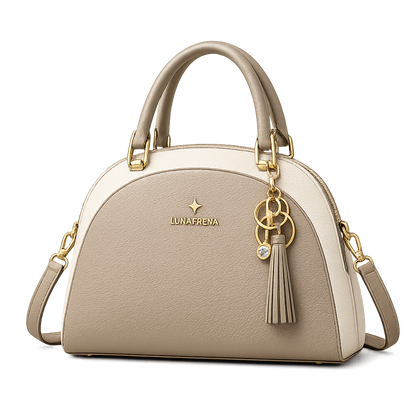
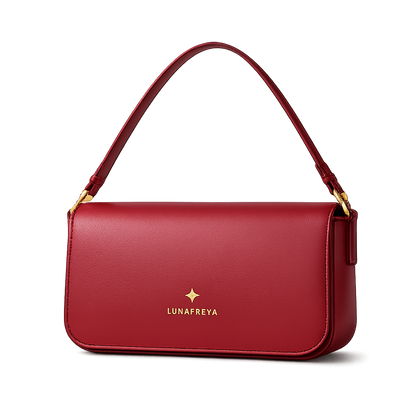
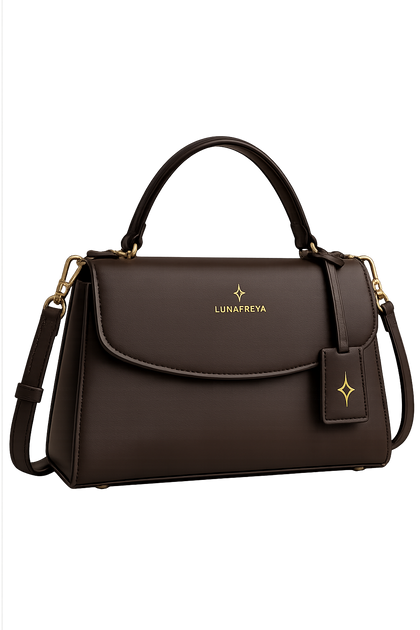
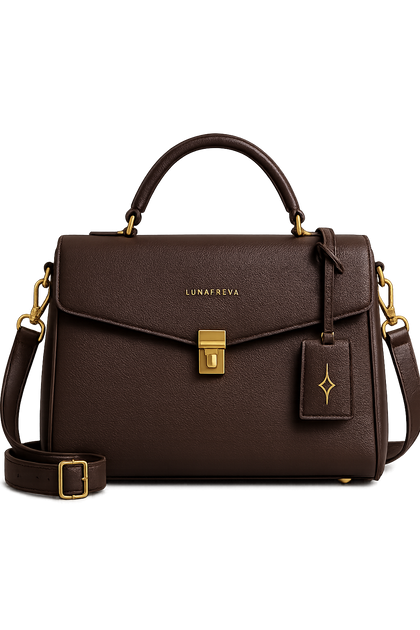
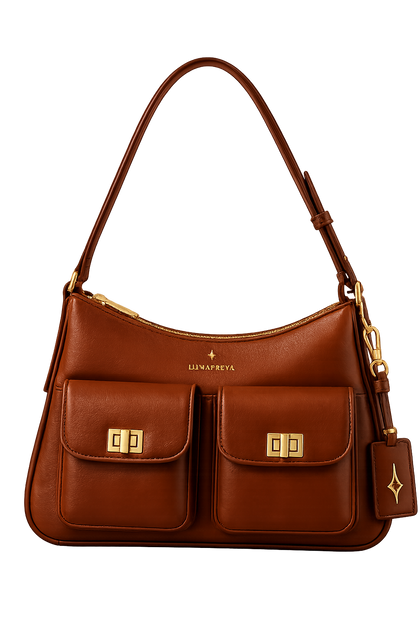
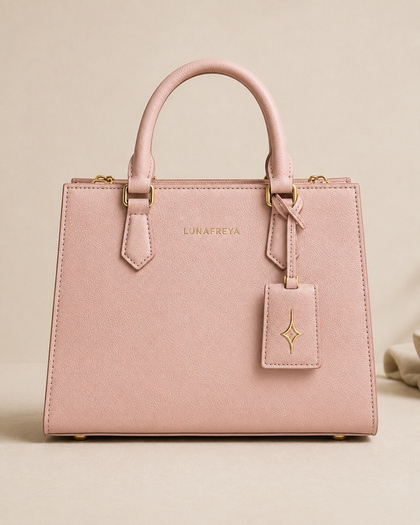
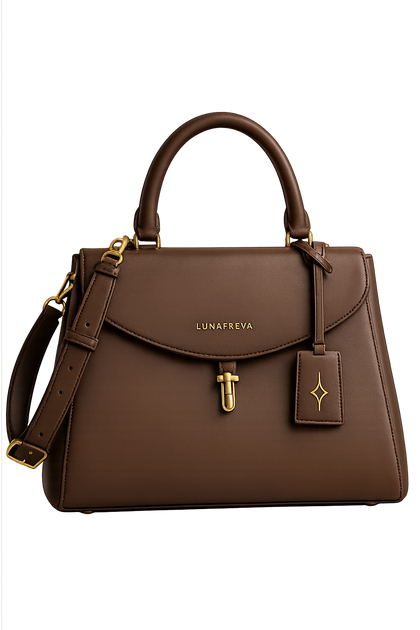
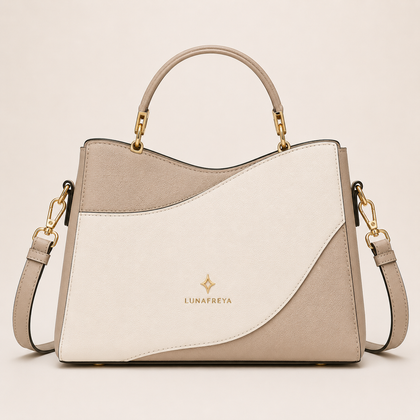
We keep the idea and take some liberties with the geometry. The Luna Satchel stays closest to the old form, upright and square-shouldered. The Luna Lock Satchel brings back the flap and fastens it with a lock. The Luna Dome Satchel rounds the whole thing off into an arc, and The Luna Two-Tone Satchel lets a curve run across the front where a schoolbag would have had a seam.
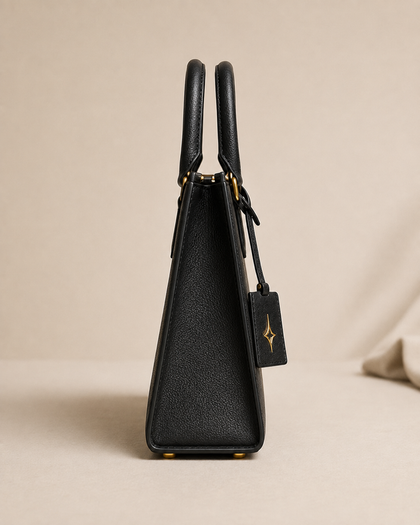
Each of them still has a flat base and a handle that sits at the balance point. Those two things are the part of the satchel we would not change.
IV. How to Choose One
Put in what you actually carry, then stand it on a table. If it leans, it is the wrong size for your life. Lift it by the handle and notice whether it hangs level. Then open it with one hand, as you will on every crowded platform for the next ten years. A good satchel passes all three without any fuss, as you would expect of a bag that spent its youth at school.


